
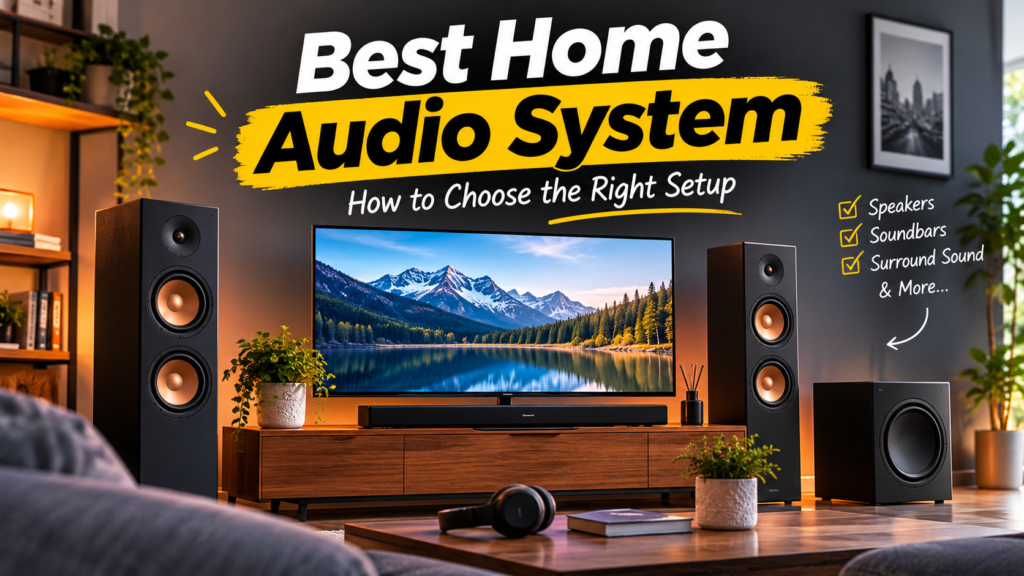
A good home audio system changes how you experience music, films, television programmes and games. Clear dialogue, well-defined instruments and balanced bass make everyday listening more enjoyable, whether you are watching a film in the living room or playing music while relaxing at home.

With so many speakers, amplifiers, soundbars and wireless audio products available, choosing the right setup requires some thought. The best option depends on your room, budget, preferred content and expectations for sound quality. Understanding the main components helps you invest in equipment that suits your home rather than paying for features you rarely use. When comparing options, the best home audio system should deliver clear sound, suit your listening habits and fit comfortably within your available space.
Start with Your Listening Habits
Before comparing audio equipment, consider how you intend to use the system. Someone who mainly listens to music has different priorities from someone building a home cinema setup.
For music, pay attention to sound balance, vocal clarity, instrument separation and the system’s ability to reproduce different genres. A pair of quality stereo speakers might be sufficient for a dedicated listening area.
For films and television, dialogue clarity and surround sound features become more important. A soundbar with a separate subwoofer offers a relatively straightforward upgrade over built-in television speakers. Larger rooms or dedicated cinema spaces might benefit from a multi-speaker arrangement.
Gaming introduces additional considerations, including directional audio and the ability to distinguish environmental sounds. If you use the same system for several activities, look for equipment with suitable connectivity and flexible sound settings.
Understand the Main Types of Home Audio Systems
Home audio systems come in several configurations, each offering a different balance of sound quality, convenience and installation requirements.
Stereo Speaker Systems
A traditional stereo system uses two speakers to create a left and right audio channel. This arrangement works well for music because it produces a sense of space and separation between instruments and vocals.
A stereo setup typically includes passive or active speakers. Passive speakers require an external amplifier or receiver, while active speakers have built-in amplification. The latter reduce the number of separate components required, making them suitable for smaller listening spaces.
Soundbars
Soundbars provide a compact way to improve television audio without installing several speakers around the room. Many models include dialogue enhancement, virtual surround sound and wireless subwoofer support.
Some higher-end soundbars also support Dolby Atmos, which uses additional audio processing and compatible speaker arrangements to create a more immersive effect. Actual performance depends on the model, room layout and speaker configuration.
Surround Sound Systems
A surround sound system uses multiple speakers positioned around the listening area. Common configurations include 5.1 and 7.1 systems, where the first number represents the main speaker channels and the final number represents the subwoofer channel.
These setups provide more directional audio than basic stereo systems. They are particularly suitable for home cinema enthusiasts who have enough space for proper speaker placement.
Choose Speakers That Suit Your Room
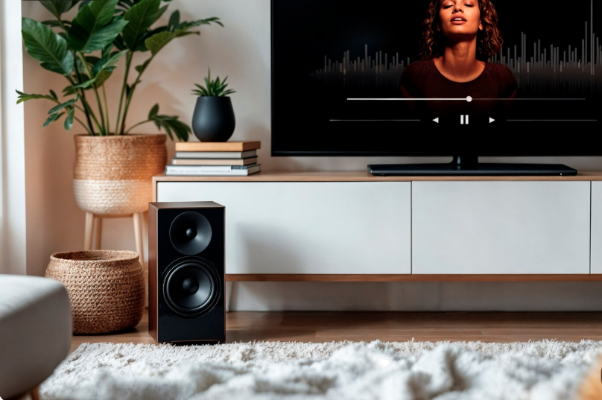
Room size and layout influence how a home audio system performs. Large floor-standing speakers might suit a spacious living room, while compact bookshelf speakers are often easier to accommodate in apartments or smaller rooms.
Consider the distance between your seating position and the speakers. Speakers positioned too close to walls might produce excessive bass, while poor placement can affect stereo imaging and sound balance.
Furniture, curtains, carpets and other surfaces also influence acoustics. Hard surfaces reflect sound, sometimes creating unwanted echoes. Softer furnishings help absorb some reflections, although their effect depends on the room and materials.
If possible, listen to speakers in a showroom before purchasing. Compare them using familiar music at a comfortable volume. Pay attention to whether vocals sound natural, bass remains controlled, and instruments are easy to distinguish.
Look Beyond Speaker Power Ratings
Power ratings are often used to compare audio equipment, but higher wattage does not automatically mean better sound. Speaker sensitivity, amplifier quality, room size and listening distance all influence performance.
For passive speakers, check their impedance and recommended amplifier power range. The amplifier should be compatible with the speakers and provide sufficient power without being pushed beyond its operating limits.
Frequency response is another specification worth reviewing. It indicates the range of frequencies a speaker is designed to reproduce, although the measurement conditions and accuracy vary between manufacturers.
A subwoofer is useful when you want deeper bass, particularly for films and music with strong low-frequency content. Its size and output should suit the room, as an oversized or poorly positioned subwoofer might create an unbalanced listening experience.
Check Connectivity and Compatibility
Modern home audio systems support different connection options. HDMI ARC and eARC are useful for connecting compatible soundbars and AV receivers to televisions. They allow audio to travel through a single HDMI connection, with eARC supporting higher-bandwidth audio formats.
Optical audio connections remain useful for certain televisions and older equipment, although they do not support every advanced audio format.
Bluetooth offers convenient wireless playback from phones, tablets and computers. Wi-Fi-based systems often provide additional features, including multi-room playback and access to compatible streaming services.
Before purchasing, check whether the system supports the devices and services you already use. Consider the number of available inputs as well, especially if you plan to connect a television, gaming console, turntable and other equipment.
Set a Realistic Budget
A home audio system does not need to consist of expensive equipment to deliver an enjoyable listening experience. A well-matched pair of speakers and a suitable amplifier often provide better value than buying several components without considering compatibility.
Set aside part of your budget for speaker stands, cables, wall mounts or installation where required. These additional items are easy to overlook when comparing product prices.
You might also prefer to build the system gradually. Starting with a stereo setup and adding a subwoofer or additional speakers later allows you to spread the cost while keeping future upgrades in mind.
Final Thoughts
Finding the best home audio system starts with understanding how you listen and what your room requires. Speaker type, amplifier compatibility, connectivity and placement all contribute to the final experience.
Rather than focusing on individual specifications or the most expensive equipment, look for components that work well together. A properly matched system, positioned carefully and adjusted to suit your space, provides a more satisfying listening experience over time.